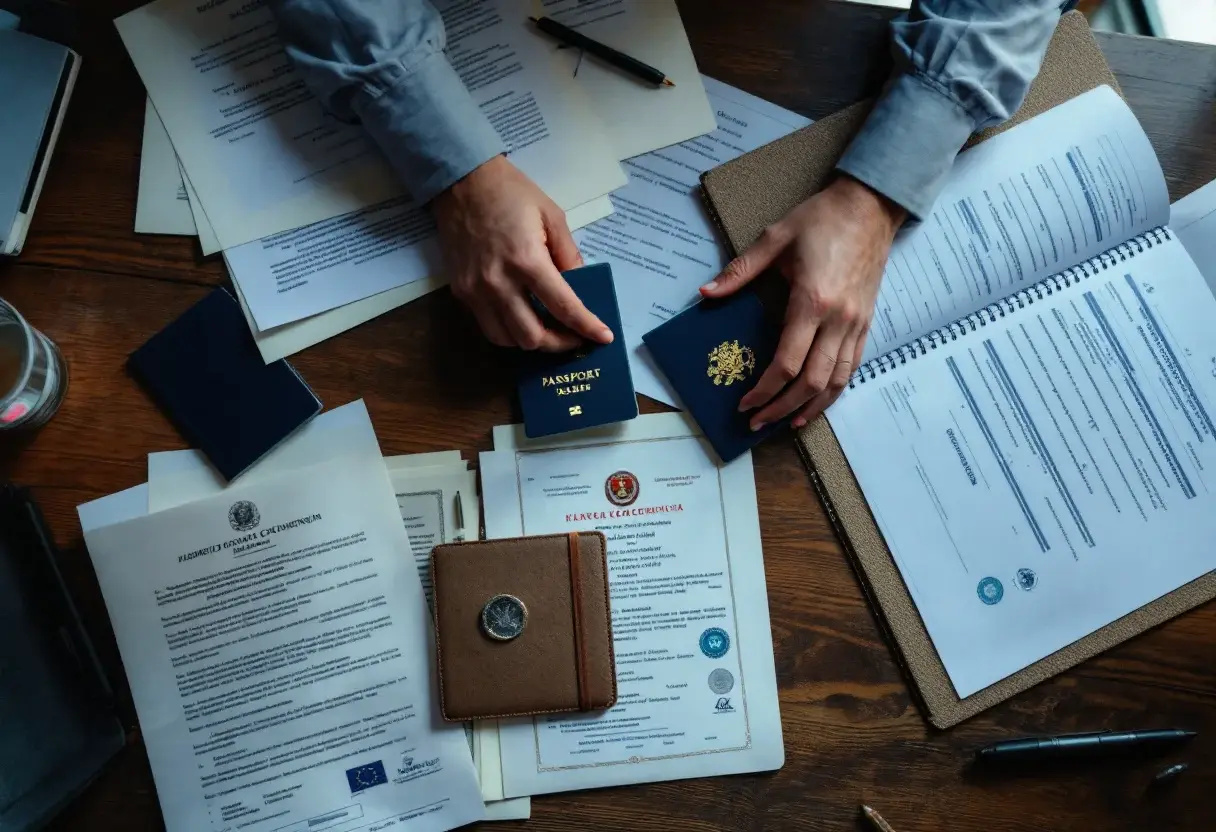
Student visa vs. student residence permit — what is the difference
These are two parts of the same journey, not two separate grounds — and confusing them costs people time. The visa is an entry document: it is stamped in your passport at a Spanish consulate and exists solely to let you cross the border. The student residence permit is your in-country status: it is confirmed by a TIE card, which you apply for in Spain within a month of arrival.
In legal terms, this status is not called residencia but estancia por estudios — ’stay for the purpose of study.’ This has one important practical consequence: years spent on a student card count only at half-rate toward long-term residency and not at all toward citizenship — the qualifying period begins only once you switch to a full residence permit.
If the programme lasts more than six months, you need both: a D visa first, then a TIE. For programmes shorter than 90 days a Schengen visa is sufficient, and no residence permit is required.
What the student card gives you
- Legal residence in Spain for the full duration of the study programme
- Right to work up to 30 hours per week — as an employee or self-employed
- Freedom of movement within the Schengen area
- The option to bring a spouse and children (accompanying family members have no right to work)
- After graduation — switching to a work permit or a job-seeking residence permit
Requirements: study, finances, insurance
The ground is enrolment in a full-time programme at an accredited institution: a university, language school, vocational training (FP), or postgraduate programme. Distance learning programmes do not qualify for a student card.
Financial requirement — funds for living expenses equivalent to 100% of the monthly IPREM (in recent years around €600; the figure is revised annually), plus funds for any family members travelling with you, and a return ticket. This can be evidenced by a bank statement, scholarship letter, or a parental sponsorship letter.
Comprehensive health insurance with full coverage in Spain and no deductible is mandatory. For programmes longer than six months, an apostilled criminal record check and a medical certificate are also required.
Working while studying
Since 2022, students in Spain are permitted to work up to 30 hours per week without a separate work permit — whether as an employee or self-employed. The key condition: work must not interfere with studies, and the schedule must not overlap with classes.
This makes the student route one of the most practical: you can legally live, study, work, and accumulate Spanish residence time that will come in handy when switching to a different permit basis.
Where to apply: from your home country or from Spain
The classic route is a D visa from a Spanish consulate in your country of residence: apply two to three months before the start of studies, with processing usually taking up to a month, sometimes longer.
The second route is to apply from within Spain: an application for estancia por estudios can be submitted online while legally present in the country (for example, on a visa-free or tourist entry), no earlier than one month before the end of your legal stay. This route is convenient but demands careful attention to timing — missing the window closes the option.
Documents
- International passport and the completed application form
- Official confirmation of enrolment (carta de admisión) in a full-time programme
- Proof of funds: bank statement, scholarship or parental sponsorship (from 100% of IPREM per month)
- Comprehensive health insurance with no deductible
- For programmes longer than 6 months — an apostilled criminal record certificate and a medical certificate
- Proof of residence in Spain (booking confirmation, rental agreement or residency letter)
What comes after studying
After graduation, a student card can be converted to a work residence permit (as an employee or self-employed) — since 2022 this can be done immediately, without the former requirement of three years of study. Another option is a one-year residence permit for job-seeking or launching a project after completing university.
Bear in mind: years spent on a student card count towards long-term residency at only half their value, and the clock for citizenship only starts from a ’full’ residence permit.
Common mistakes
- Enrolling in a distance or partially remote programme — a card will not be issued
- Insurance with an excess or incomplete coverage
- Filing from Spain no later than one month before the end of legal stay
- An account that was ’built up’ just before filing — consulates look at the origin and history of funds
- Unclosed gaps between the end of one programme and the start of the next
Student residence permit for Spain — full service
- Finding a programme and institution that meet the in-person attendance requirement
- Checking the amount and origin of funds before filing — to avoid a refusal on financial grounds
- Insurance without an excess: which policies are accepted and which are turned down
- Criminal record certificate, apostille, and sworn translation
- Choosing the route: consulate or application from within Spain, with a timeline calculation
- Filing, managing the case, and obtaining the TIE after entry
A legal consultation — 80 €.Credited toward the full service fee if you continue with us.
During the consultation the lawyer reviews your situation based on your documents and provides filing route: which basis, what will be needed and in what order.
Government fees, notarisation, certified translations and apostille, where required, billed separately at actual cost — we will itemise them for your situation. Processing time depends on the authority and its workload, which is why we do not publish an average figure.
Frequently asked questions
How to obtain a student residence permit in Spain?
The process works as follows: enroll in a full-time program and obtain a carta de admisión, gather proof of funds covering at least 100% of IPREM per month plus comprehensive insurance with no deductible, submit your documents to the Spanish consulate (or online from within the country if you are there legally), enter on a D visa, and within one month apply for your TIE card. For programs lasting more than six months, you will also need a criminal record certificate with an apostille and a medical certificate.
Is a student visa the same as a residence permit?
A visa is merely an entry document; your legal status in Spain is established by the TIE card, which is obtained after entry. In legal terms this status is called estancia por estudios — ’stay for the purpose of study’ — not residencia. As a result, years of study count only at half-rate toward long-term residency and do not count at all toward citizenship.
Does studying in Spain give the right to stay after graduation?
Yes. Since 2022, a student card is converted to a work residence permit immediately after graduation, without the previous requirement of three years of study. An alternative is a one-year residence permit to look for work or launch a personal project.
How much money do you need for a student visa to Spain?
Based on 100% of the monthly IPREM — approximately 600 € (the figure is reviewed annually). For one academic year, applicants typically show around 7,000–8,000 € plus funds for family members and a return ticket.
Can you work on a student visa in Spain?
Yes, up to 30 hours per week, as an employee or self-employed, without a separate permit. The condition is that work must not interfere with studies.
Can you apply for a student residence permit while already in Spain?
Yes, if you are legally in the country, the application can be submitted online — no later than one month before the end of your permitted stay. Missing this deadline closes this option; you will then need to apply through a consulate.
What to do after finishing your studies?
Switch a student card to a work residence permit (immediately, without the three-year study requirement) or obtain a one-year residence permit to look for work. Years of study count towards the residency qualifying period at half credit.
Can you bring your family on a student visa?
Yes, a spouse/partner and children may receive accompanying cards for the duration of your studies, but without the right to work. Additional funds beyond your own minimum will be required.
Verified August 4, 2026. The thresholds and amounts are tied to indicators that are reviewed annually — check the official source for your country before filing.
- Foreigners Act regulations (Royal Decree 1155/2024) — study residence: 100% of IPREM per month for the applicant, 75% for the first family member and 50% for each additional member, plus insurance from a company authorised to operate in Spain
- Organic Law 4/2000 on the Rights and Freedoms of Foreigners in Spain
Services and prices — openly, before any conversation
- Student visafrom €1,300
People usually add: opening a bank account — 250 € · obtaining the tie — resident card — 200 €. Two or more services — 5% off each.
Prices are all-inclusive; 21% VAT is included.